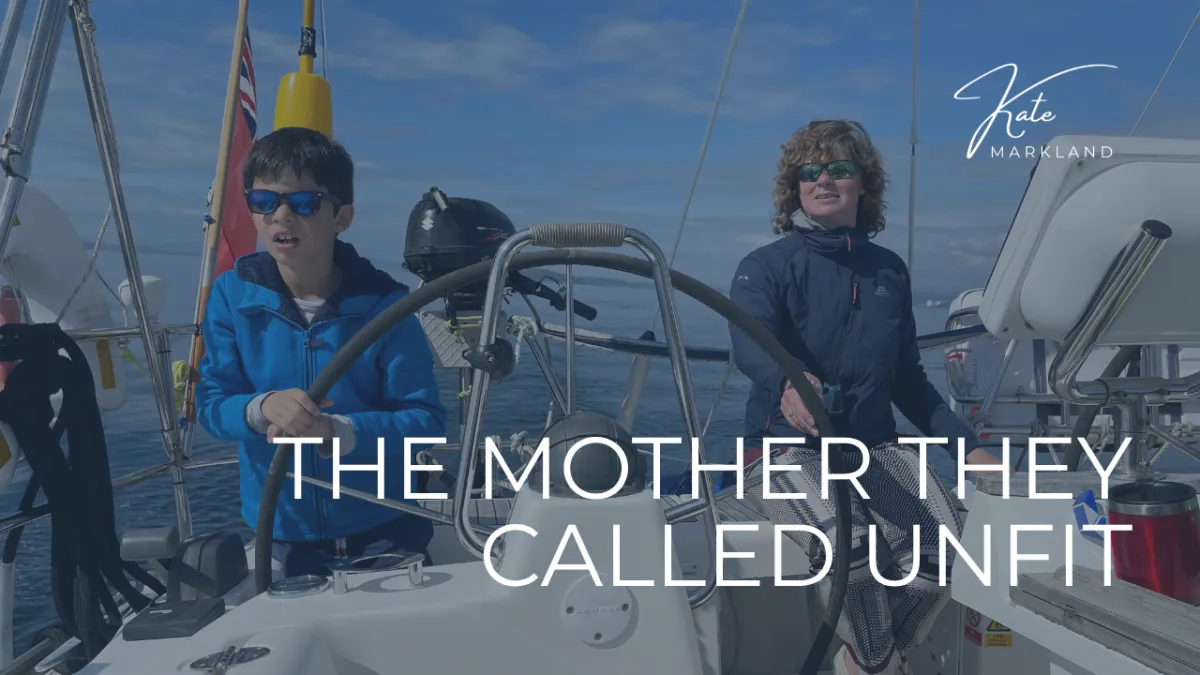
The Mother They Called Unfit
In 2019, a family court judge concluded that Kate Markland was emotionally unfit to parent.
No clinical psychologist conducted the assessment. No psychiatrist was involved. No validated psychological instruments were applied. The GP records, which cover everything from the age of twenty, show nothing: no mental health referrals, no psychotropic medication, no clinical history consistent with any form of emotional unfitness. Nothing.
The finding was made by a lawyer.
Kate did not accept that finding as the final word. She sought out the most rigorous independent psychological assessment available. A consultant clinical psychologist administered the MCMI-III, the BDI-II, and the BAI — three of the validated instruments the court had never applied. The British Psychological Society and Family Justice Council joint statutory guidance on psychologists as expert witnesses sets out precisely what a valid assessment requires. The court applied none of it.
The clinical results, in the clinician's own professional language, were unambiguous. The clear absence of any form of psychological difficulty. No depressive or anxiety-based symptoms. No personality or emotional difficulties that would preclude at least good enough parenting. No offending history. No substance misuse.
Every line of evidence the assessment examined reached the same conclusion.
The court had reached the opposite conclusion without examining any of it.
Two documents. One standard.
Two documents now exist. One is the judicial finding. One is the clinical finding. They cannot both be true. One of them used validated instruments, a qualified clinician, and a regulated professional methodology. The other used a judge's opinion, formed in proceedings, without clinical training.
The clinical document is the one on the public record. The judicial document is the one that was acted upon.
In 2021, around 70 attachment researchers coordinated through the University of Cambridge published a consensus statement warning that family courts frequently misunderstand or misapply psychological concepts, including attachment theory. They emphasised that attachment assessments have limited precision for individual predictions and urged greater reliance on direct evidence of caregiving behaviour rather than broad assumptions about emotional bonds or parental fitness.
The 2019 judicial finding did not follow these standards. The clinical assessment that contradicted it did.
What this means
That gap, between the finding that was made and the finding that the evidence supports, is not a footnote in a family dispute. It is the architecture of what happened to Gabriel. And it is sourced, documented, and available.
Source references
BPS/Family Justice Council (2016) Psychologists as Expert Witnesses in the Family Courts in England and Wales — minimum standards for clinical assessment.
Duschinsky et al. (2021) Cambridge consensus statement: attachment concepts misapplied in family proceedings.
See also: Post Judges Are Not Clinically Qualified to Assess a Parent's Emotional Fitness.


