The real trade between Bradford and Pakistan is in stories
I went to a UK and Pakistan trade conference in Bradford expecting to hear about cloth and mangoes. She came away thinking about family, succession and the stories we pass on.
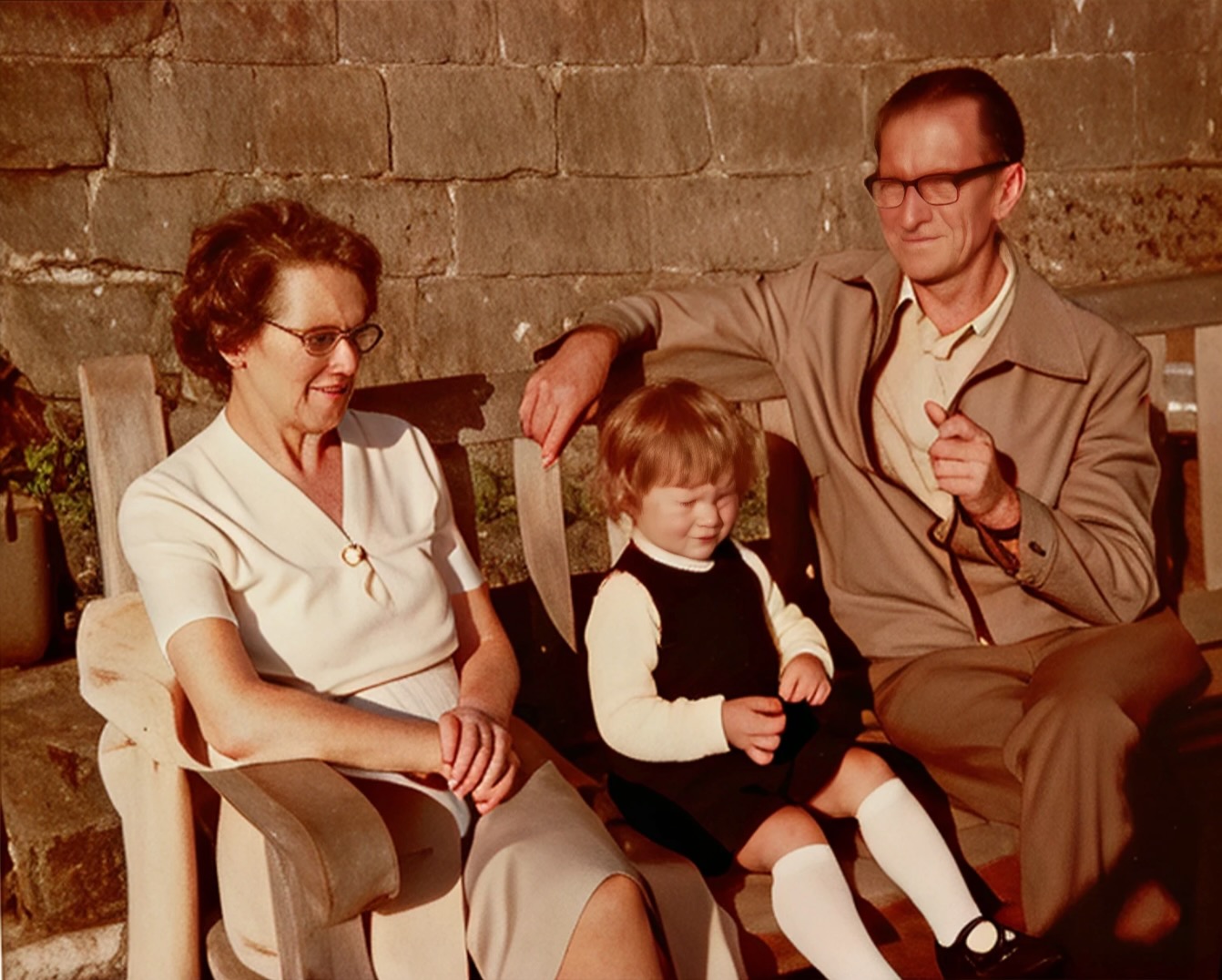
Last Thursday I took the night coach to Bradford. It's my mum's city. My grandad lived here, and when I visited as a child he didn't read me stories, he recited them. If, Albert and the Lion, The Green Eye of the Yellow God. If came round again and again. I think he knew I needed it. The other treat was the Pakistani sweet shops: trays of barfi in pink and green, lit up in the window, and me as a little girl taking far too long to choose.
I hadn't been back much since he died, so the Pakistan Britain Business Council conference felt like a good reason to go. I went to listen, and the best of the day came in the form of stories.
Two stories about trust
The first came from a Bradford textile businessman. About twenty years ago he had a problem with epaulettes, the shoulder pieces on military uniforms. A man from Pakistan knocked on his door, told him what he did, and promised 5,000 epaulettes in two weeks. He didn't think it was possible. Two weeks to the day, the man's son turned up with the boxes. They have done business together ever since. His point was simple: value the relationship more than the money. Most of what I wrote down about trust that day came from him. It's the greatest asset you have in trade, and the hardest thing for a competitor to copy.
The second came from a man whose family opened a restaurant in Shipley in the 1970s. He studied chemical engineering instead of joining the family business, which didn't go down well at home. He learned how food is made at scale, then came back and worked out how to get the restaurant's food onto supermarket shelves. The first thing he needed was a supplier of spices he could rely on. Heritage opens doors, he told the room. If you're my cousin in Pakistan, you'll get your chance. But if you don't deliver, that's it. Heritage opens doors, and quality keeps them open.
There was a mango story too. During COVID the ships couldn't get Pakistan's mangoes out, and afterwards shipping costs rose so much that they went by air instead. It's a real-life maths and logistics problem any classroom could get its teeth into.
Speakers kept using one word for Pakistan's textile industry, weave, and I liked it. It's what two countries do when trade works, and it's what families do with their stories.
Who will carry it on
Education is one of the UK's biggest exports to Pakistan, and we heard Pakistan's education market is growing by more than 10% a year. Speakers talked about the young people with a foot in both countries who will build trade in ways people my age haven't thought of yet. My son Gabriel is one of them. He's British Pakistani, and his father's family made the long journey from Pakistan too.
I've seen that generation for myself. Last year I ran storytelling workshops in primary schools across Bradford, and children there became published authors in The Adventures of Bradford, an anthology for the city's literature festival during its year as UK City of Culture. As one pupil told the local paper, "I loved being an author for my own age group."
My mum's family made a shorter one. They were farm labourers who came to Bradford for the mills during the Industrial Revolution, when about two-thirds of England's wool was produced here. In the 1950s men from Mirpur and other parts of Pakistan came for the same reason, because the mills needed workers. The distance was different. The need wasn't. And stories are how a stranger becomes a neighbour.
On the Friday I took tulips to my family's graves, for the first time in years. The cemetery is huge now, and a great many of the names on the stones are Pakistani families. Bradford's whole story is there in one place.
What I'd have said at the end
It was a long day with a lot of voices, and not every word landed the same way for everyone. If I'd had the last word, I'd have said this.
We spent the day talking about cloth, mangoes and spices. But every one of those stories was really about family. A son delivering on his father's promise. A son who left the family restaurant and came back to grow it. Most businesses in that room are family businesses, and the hardest thing a family business ever does is pass itself on.
As I was leaving, a Yorkshireman from Sheffield came over. He works with family businesses on succession planning, and he wanted to talk about one thing: how much heritage stories matter.
He's right. Success and succession are almost the same word. What a family really hands down isn't only the money or the firm. It's the spirit of it: why it started, what it stands for, how you treat people. That only travels one way, through stories.
I saw it for twenty years as a physio. If someone's mother had ended up in a wheelchair, they had often decided they would too. The stories we inherit shape us. My grandad's If shaped me. When my Manchester granny's things were sorted, everything she'd kept came down to a couple of boxes. I sat and went through them: postcards, photographs, treasure.
AI can now write a product description in seconds. Nobody can copy where you come from.
The families who keep their stories alive and hand them on will keep the very thing that makes them.
Kate Markland is a story weaver, speaker and author. She co-writes The Adventures of Gabriel with her son, and through the Markland Method™ helps families and family businesses pass on the stories that hold them together.


