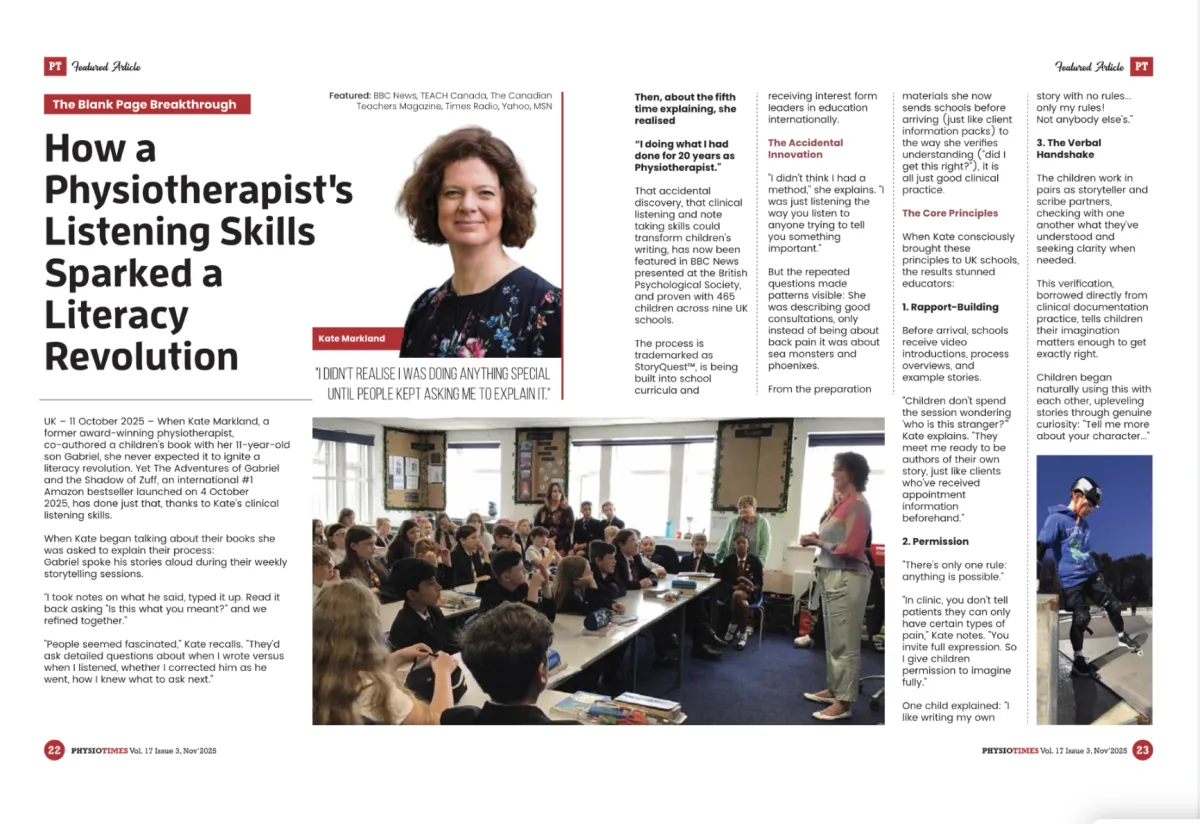
When Your Clinical Training Becomes Your Superpower: The Blank Page Breakthrough
I did not realise I was doing anything special until people kept asking me to explain it.
After the fourth or fifth time someone asked detailed questions about how Gabriel and I created The Adventures of Gabriel together, something clicked. They wanted to know when I wrote versus when I listened. Whether I corrected him as he went. How I knew what to ask next. That is when I realised: I was describing a good clinical consultation. Only instead of back pain, it was about sea monsters and phoenixes.
This month, PhysioTimes India published "The Blank Page Breakthrough," validating what I had discovered through twenty years of clinical practice: the listening skills we develop as physiotherapists do not just heal bodies. They unlock creativity.
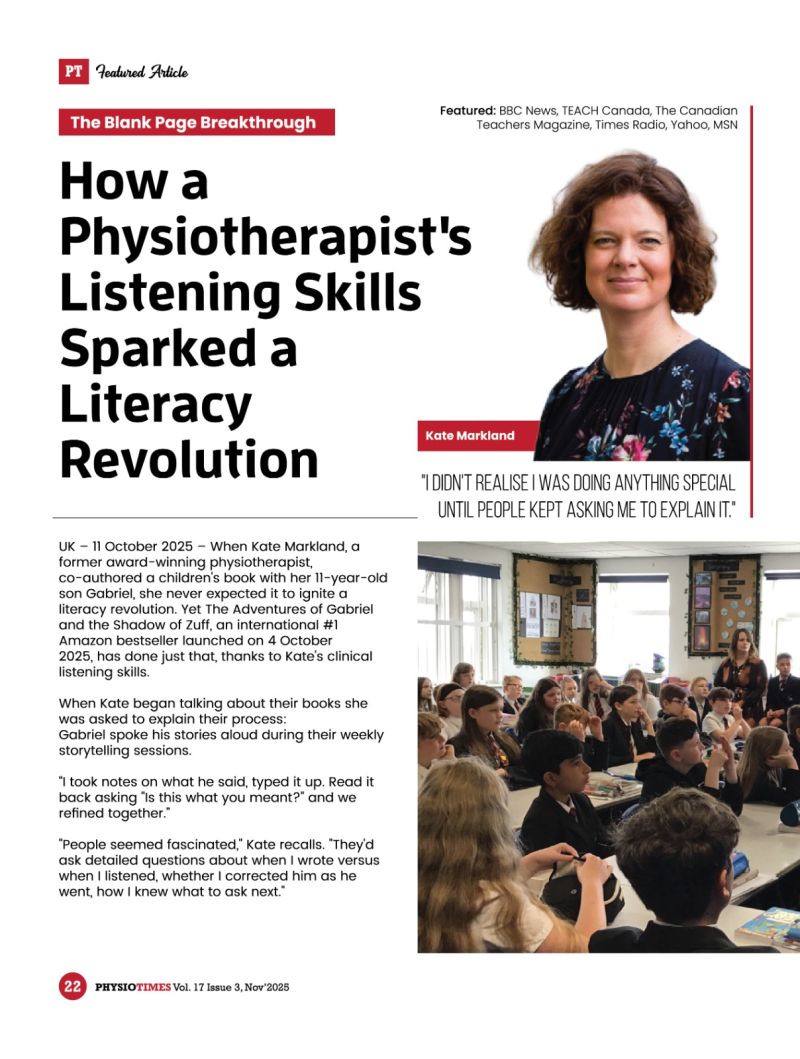
The blank page problem is exactly like the blank history form problem. When patients arrive for their first appointment, they are nervous. They do not know what is relevant. They minimise symptoms or over-explain, trying to guess what you want to hear. Your job is to create safety for their truth to emerge. You build trust before you ask difficult questions. You give permission to express the full experience. You verify you have understood correctly. You ask open questions about lived reality rather than closed questions with predetermined answers.
Children facing a blank page need the same things. They are terrified of being wrong, of looking stupid, of not being good enough. They need permission. They need verification that their ideas matter. They need someone listening without judgment or premature correction. That is what physiotherapists do every day. That is what the StoryQuest methodology does.
With Gabriel, I applied every clinical principle I had developed over two decades without consciously recognising it. Building rapport before beginning. Creating psychological safety before asking difficult questions. Inviting full expression. Reading back what I had captured: "Is this what you meant?" Not asking "did you enjoy creating?" but asking "what was it like to be the author of your own story?" That is a clinical question. It elicits lived experience rather than a satisfaction rating.
Nine schools, 465 children, 100% engagement, zero behavioural incidents. Validated by Classic Grounded Theory methodology. Presented at the British Psychological Society. Published in the Journal of Novel Physiotherapy and Rehabilitation. StoryQuest was not born because I am a gifted teacher. It was born because I am a trained listener, and trained listeners create conditions where truth and creativity emerge naturally.
The PhysioTimes publication makes something clear that I want every healthcare professional reading this to hear: the clinical skills you have developed are not contained by the walls of your clinic. The rapport-building you do instinctively. The way you create safety for difficult conversations. The open questions you ask to elicit genuine experience. These are human connection skills with applications you have not yet discovered. I never set out to create an educational methodology. I just applied the only skills I knew to staying connected with my son during impossible circumstances. Those skills changed everything. Not because they are special. Because they are transferable.


