Why Children's Stories Should Be Written by Children
There is something we have quietly accepted about children's literature that deserves examination. Almost every book a child reads was written by an adult. An adult imagining what childhood feels like. An adult constructing a child's voice, a child's fears, a child's sense of what matters. Some of these adults are extraordinarily gifted at this. The best children's literature crosses the gap almost invisibly. But it is still a gap. And children know it, even when they cannot name it.

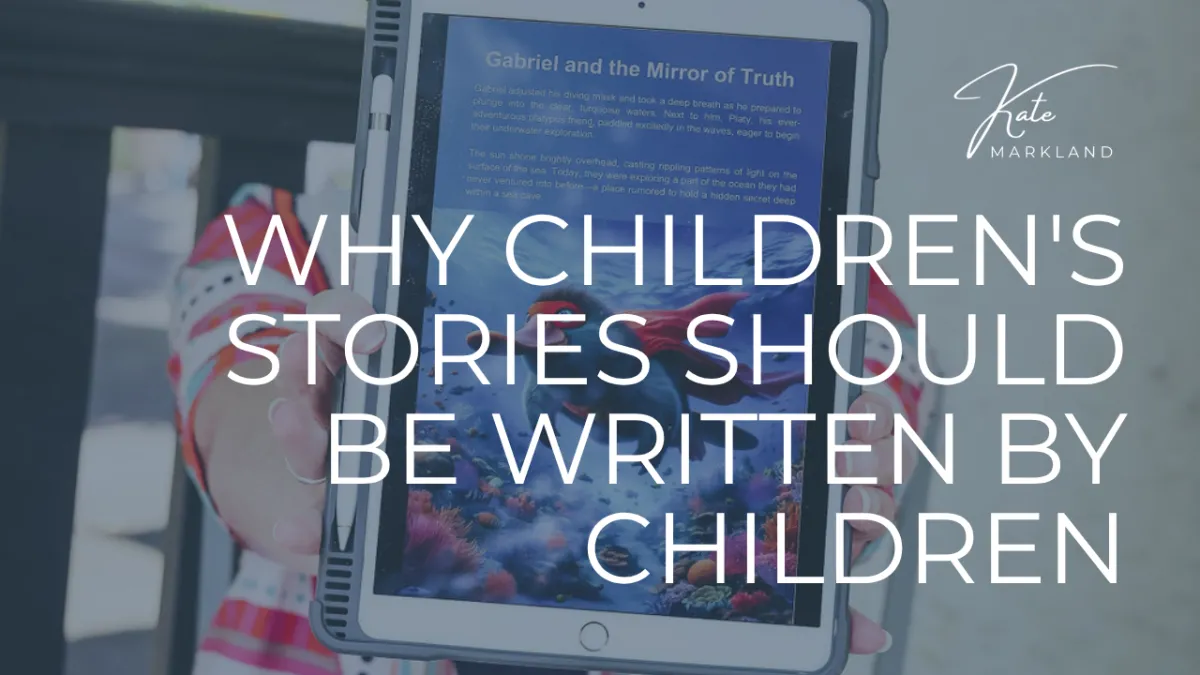
What they recognise in The Adventures of Gabriel is something different. A boy their age, thinking the way they think, caring about the things they care about, facing the kind of fears that feel real at ten rather than the fears adults remember from ten. Gabriel's imagination is not curated for a market or shaped by a publisher's understanding of what children respond to. It is simply his. Unfiltered, particular, occasionally strange, and entirely authentic.
When a child in Bradford said "Gabriel's imagination feels like mine," he was not paying a compliment. He was identifying something precise. He was recognising himself in a story, not the idealised version of himself that adult authors construct, but the actual, complicated, vivid inner life he inhabits and rarely sees reflected back.
This is what StoryQuest produces at scale. Stories written through a child's lens, by the child, capturing exactly what they said in the moment they said it. No adult has smoothed the edges or redirected the plot toward a more commercially viable resolution. The sea monster is whatever the child decided a sea monster should be. The hero's courage arrives when the child decided it would arrive. The ending belongs entirely to the child who imagined it.
The result is a body of work that other children can read and recognise as genuinely theirs. Not a gift from an adult world that means well. A mirror held up by a peer. That is rarer than it sounds, and more powerful than any curriculum framework can capture.


