01
One question to ask their team on Monday morning, and one for the kitchen table tonight

Uncertainty makes people freeze, just as fear makes a patient stop moving. In 45 minutes your audience hears how Kate helped people move again, in the treatment room and at the kitchen table, and then practises the Markland Method themselves. They leave with one question for Monday morning and one for the kitchen table tonight.
are waiting for the world to settle before they dare imagine a better one
have stopped listening to each other's stories
lead people they rarely see in the same room
wonder what is left for people in an AI world (the answer is imagination)
are tired of change being done to them, and ready to build what comes next, together
1. Rapport. Build trust before the first word is spoken.
2. Permission. One rule: anything is possible. Invite the whole story, not the safe version.
3. The Verbal Handshake. Say it back to check you heard it right: "Did I understand that right? Tell me more."
4. The Golden Question. Ask "What was it like?", not "Did you enjoy it?"
Genuinely curious, never leading.
In the keynote, Kate shows each principle at work, in the treatment room, at the kitchen table and in the classroom. Then your audience puts them to work themselves.
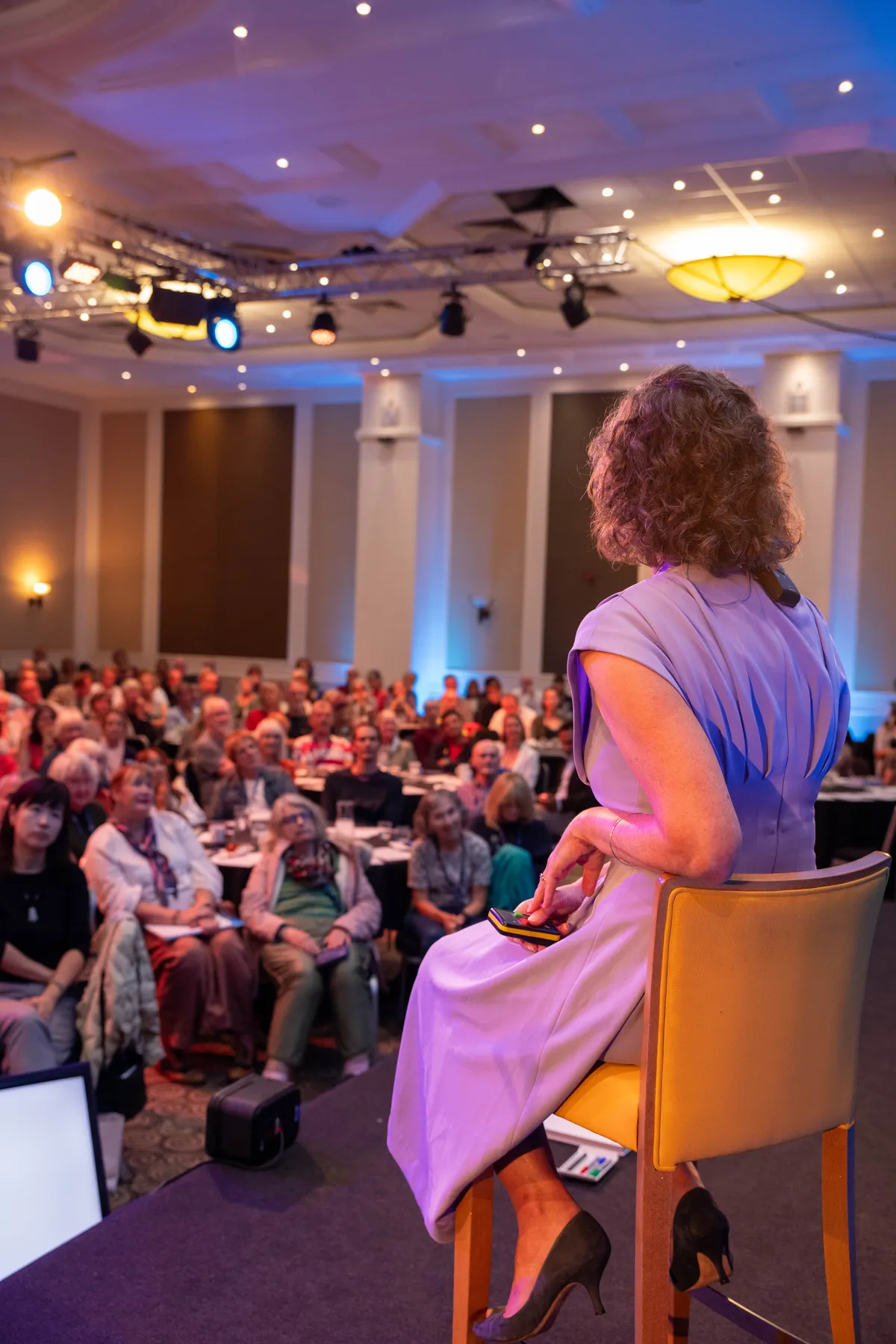
Halfway through, your audience stops listening and starts doing. In pairs, one person asks a single question, gives the other space, and captures the answer word for word, correcting nothing. Then they check they heard it right, and swap. In a few minutes the room has felt what being heard before being corrected does. It is the moment delegates talk about at the coffee break.
Every keynote starts with a handshake and ends with a hug. Kate's last line is "So imagine a better one." Then the whole room sends Gabriel a hug, and Kate passes it on when they next speak. At one conference, 400 people did it. Delegates leave with the Virtual Hug, and one question to ask someone that evening.
Press or podcast:
For event organisers [link]
One question to ask their team on Monday morning, and one for the kitchen table tonight
The habit of hearing a story back before correcting it
A better ending for their team, chosen together
The confidence to take the first step before the ending is clear
As a physiotherapist, Kate saw people in pain get better in the same order: they described the life they wanted, told their story and heard it back uncorrected, then took one step with support. Gabriel did the same at the kitchen table, and 465 children did it in the classroom. When the future is uncertain, people don't need a prediction. They need someone to imagine a better world with them, and to hear them while they build it. The answers are in the white space.
Kate used to row. In a rowing boat you face backwards: you can't see the finish line, and eventually you cross it. That is what leading through uncertainty feels like, and why trust matters more than a forecast.
In every book, Kate and Gabriel decided it would end well long before they knew how. The same was true of the hour itself: "If you don't quit, we will find a way." Your people can't see the ending either. In the keynote they practise choosing it, and listening their way there.
"We'll need writers who can remember freedom: poets, visionaries, realists of a larger reality." Ursula K. Le Guin, National Book Awards, 2014
When the story needed to reach Alaska, Kate posted Gabriel a printed sheet of 30 ways to travel. He didn't need it. He already knew the way. Most leaders hand their people a sheet of options. The ones who listen find out the team already knows the way.
Imagine the world your team wants to work in, then build it together. What becomes possible when a leader stops supplying the answer and starts listening for the one already in the room.
Let children imagine a world, and watch them write it. Engagement, reluctant writers and child-led creativity, drawing on sessions in nine UK primary schools. When 318 children wrote about being the author of their own story, the same seven changes appeared again and again, from joy to "I felt like a real author".
Build a world with your child, and they will tell you everything. Connection, listening and helping a child find their voice, including across distance.
Stay close across distance. For forces, defence and international organisations whose people live and work far from the ones they love: what children who are far apart can teach us about building one world together.
For organisations whose work is imagining a better world and building it with the people they serve. A reminder for supporters, trustees and teams of why the work matters: people move forward once someone hears them. Imagining a different world isn't an escape from this one. It's how you change it.
When it came to story writing, some children would just shut down. StoryQuest changed that. They were joyful, buzzing, excited to tell their stories.
Engaging reluctant boys in writing has been a school focus. In our session, they couldn't wait to get started. The joy in the room was infectious.
I didn't know I had so many stories inside me until I was allowed to let them out.
A 45-minute keynote, in person or online
The Eye of the Needle: a version for teams working under tight constraints of budget, time and people, where the constraint forces the solution
The team session: an optional [half-day] session after the keynote, where one team builds a world together [length, group size and price to confirm
A briefing call, so the talk is shaped around your audience and your theme
Bios, photos and a stage introduction, ready to use
A short video clip for your event publicity [to confirm]
Kate stays to meet delegates where the schedule allows [to confirm]
Keynote
About Kate
For event organisers
Book a call
+44 7360 270776


© 2026 Kate Markland. All rights reserved. | Operated by STORYQUEST LTD | Registered Company No. 16741202